Shared Ground: Implementing and Sustaining Public Greenspace as Civic Infrastructure
As climate risks intensify, public greenspace is no longer seen as optional, but instead as civic infrastructure. Shared Ground transforms Detroit's vacant land into community-defined public greenspace that strengthens neighborhood connection, climate resilience, and civic life. While cities have developed strong plans and data-driven visions for land reuse, far fewer systems exist to translate those visions into implemented, stewarded public spaces — Shared Ground responds to that gap by positioning the University of Michigan as a catalytic partner in implementation.
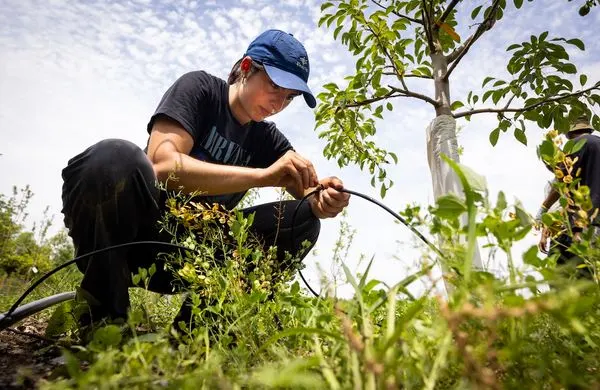
Rather than producing new plans, the initiative focuses on the most difficult and underfunded phase of climate action: moving identified priority sites from planning into constructed, stewarded public greenspace. Anchored at the School for Environment and Sustainability and developed in partnership with the City of Detroit, the Detroit Land Bank Authority, Detroit Future City, and community-based organizations, Shared Ground treats greenspace as essential civic infrastructure — climate, social, learning, and economic — through pilot implementation on City and Detroit Land Bank Authority-owned parcels, student-powered delivery through the SEAS Sustainability Clinic, justice-centered engagement, and shared decision-support tools including the LANDinfo Decision Support System.
By bringing together residents, community organizations, municipal partners, and University of Michigan expertise, the initiative will implement multiple pilot greenspace projects, advance additional priority sites toward implementation, establish baseline and longitudinal ecological and social metrics, and develop transferable tools, guidance, and stewardship pathways — transforming shared visions into lasting public spaces while demonstrating how universities can help cities build durable civic infrastructure for climate resilience, public health, and long-term community benefit.
U-M Teams
School for Environment and Sustainability (opens in new tab)
Secondary Contacts
Shannon Brines (School for Environment and Sustainability), Mark Lindquist (School for Environment and Sustainability), Tony Reames (School for Environment and Sustainability)