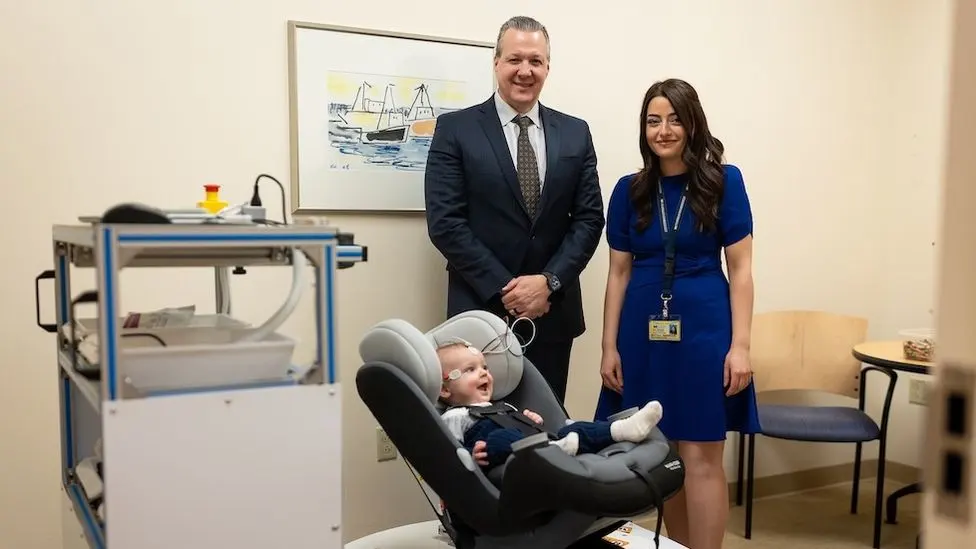
A team of University of Michigan researchers and UM-Dearborn engineers has created a specialized rotational chair designed specifically for infants, aiming to make vestibular screening as routine as newborn hearing tests.
What it does
The inner ear’s vestibular system helps the brain understand head movement and maintain balance—critical for early motor development (crawling, sitting, walking). While adults can be tested using rotational chair exams that track eye movements, infants can’t safely or reliably use existing chair-and-goggle setups, leaving many vestibular disorders undetected.
The innovation
Led by a professor of otolaryngology, Devin McCaslin, and Batoul Berri, a pediatric audiologist from C.S. Mott Children’s Hospital, the project partnered with Interacoustics (funding + engineering support) and a UM-Dearborn product development team led by clinical professor, Kas Kasravi, with faculty/staff support and undergraduate designers from the Human-Centered Engineering Design program.
Unlike stationary adult systems, the new chair was designed to be mobile, infant-safe, and clinically usable—built through a rigorous, needs-driven engineering process that produced a device described by collaborators as finished-product quality, not a rough prototype.
Why it matters
Right now, clinicians don’t know how common infant vestibular disorders are because routine screening isn’t feasible. Early detection could enable earlier intervention—potentially improving motor outcomes during a key window of brain development, much like early hearing screening has improved speech and language outcomes.
What’s next
- A patent has been filed for the infant rotational chair.
- Berri and McCaslin are using the chair to collect normative data from healthy infants at Mott.
- Next phases include screening NICU infants and babies with hearing loss (a group that often has vestibular issues).
Big picture: This collaboration across medicine, engineering, and industry could open the door to a future where infant vestibular screening becomes standard care—helping families identify and address balance-related developmental challenges earlier than ever before.