The center’s “beyond amyloid” theme expands that focus. Investigators study neuroinflammation, vascular health, environmental exposures, and other molecular pathways that may contribute to dementia. Their work also encompasses frontotemporal dementia, Lewy body dementia, vascular contributions to cognitive impairment, and limbic-predominant age-related TDP-43 encephalopathy, or LATE.
Researchers are also seeking ways to identify dementia-related changes earlier. At Michigan State, a team is developing blood-based biomarkers for multiple age-related dementias, with an emphasis on ensuring that new diagnostic tools work effectively across populations.
"There is excitement around developing new imaging biomarkers for Alzheimer’s disease and related dementias, such as vascular contributions, glymphatic function, and brain immune mechanisms," said Ansel Hillmer, Ph.D., an associate professor of radiology.
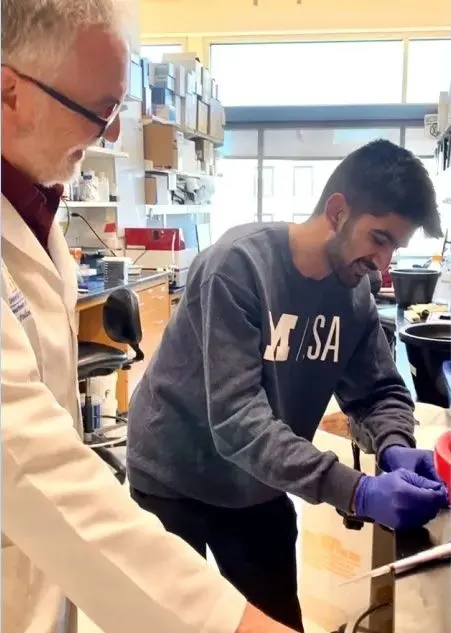
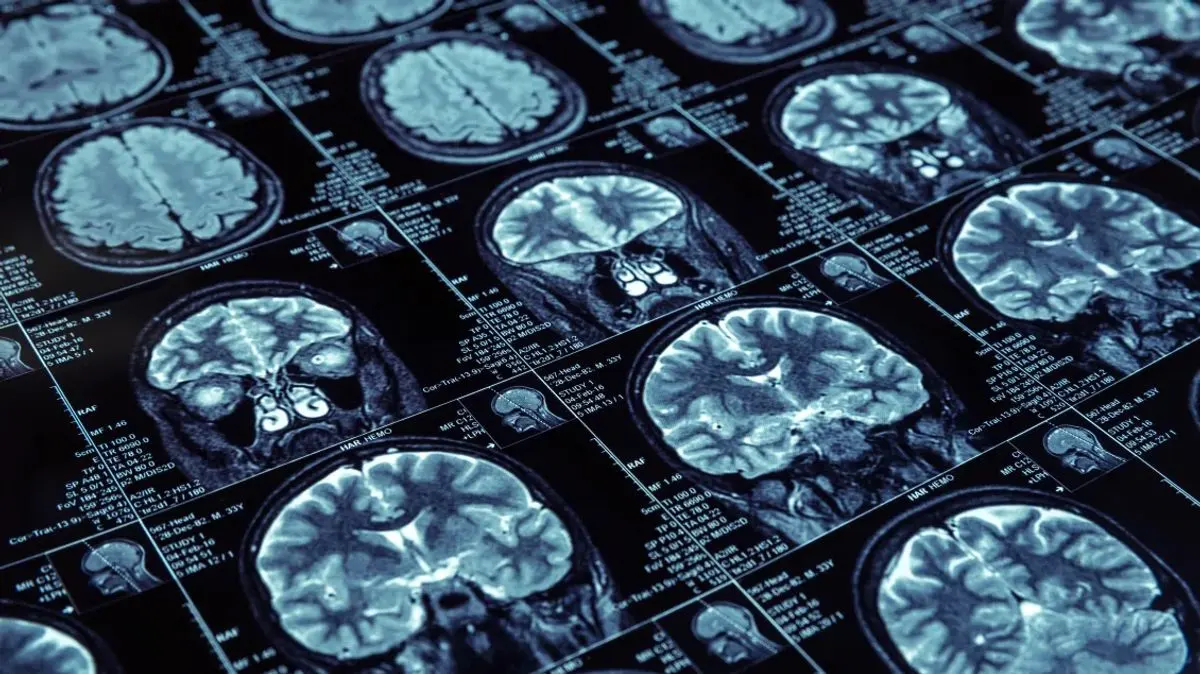
At U-M, Hillmer and Douglas Noll, Ph.D., professor of biomedical engineering, use MRI and PET scans to trace structural, functional, and molecular changes in the brain. Detecting those changes before cognitive problems appear could help identify who is at risk and when an intervention might be most useful.
“Our imaging tools help ‘see’ the brain’s earliest cracks long before symptoms emerge,” Noll added.
Together, these efforts support a broader goal: developing diagnostic tools and treatments that reflect the many biological, environmental, and social factors that shape dementia.
Building knowledge over time
One of the center’s key resources is the U-M Memory and Aging Project, or UM-MAP. Through the project, the MADC has enrolled over 1,100 participants over the past decade, collecting longitudinal cognitive, behavioral, neurological, imaging, and biological data that support aging and dementia research.
These longitudinal data help researchers investigate why some people remain cognitively resilient while others develop dementia. Center teams also use advanced analytics and machine learning to identify patterns across complex datasets while protecting participant privacy. The findings help identify strategies for future prevention and treatment trials.
“Longitudinal data are our gold mine — tracking whose and how cognitive pathways diverge allows us to tailor precision trials,” explained Judith Heidebrink, M.D., professor of neurology, and co-leader of the center’s clinical core.
Families may choose to donate a loved one’s brain for research after death through the Michigan Brain Bank. Donated tissue allows researchers to examine molecular changes that cannot be fully observed through brain scans, blood tests, or clinical evaluations. These studies can reveal how dementia progresses and why it takes different forms.
“Each brain tells a story. Unlocking molecular clues within the tissue propels future breakthroughs,” explained Sami Barmada, M.D., Ph.D., who leads the donation program.
The center contributes its findings and resources to the broader scientific community through the national ADRC network. It shares research data through the National Alzheimer’s Coordinating Center, biological samples through the National Centralized Repository for Alzheimer’s Disease and Related Dementias, and genetic information through the Alzheimer’s Disease Genetics Consortium.The network also supports major initiatives such as the Alzheimer’s Disease Neuroimaging Initiative and the Alzheimer’s Clinical Trials Consortium. By sharing standardized data and resources, researchers can study larger populations, reproduce findings, and move promising discoveries toward clinical use more efficiently.
Research built with communities
Dementia research can produce broadly effective diagnostic tools and treatments only if studies include the populations expected to use them. Yet many racial and ethnic communities have historically been underrepresented in clinical research.
The center works with partners in Detroit, Lansing, rural Michigan, and other communities to build trust, improve access to studies, and ensure that research questions reflect community priorities. Its three-university structure gives researchers access to complementary expertise while helping them recruit participants who better represent the nation’s racial, ethnic, geographic, and socioeconomic diversity.
By broadening participation, these partnerships produce findings that are more useful to patients, families, and clinicians throughout Michigan and across the country. Community members also help shape research priorities by sharing their experiences with dementia, caregiving, health care, and research participation.
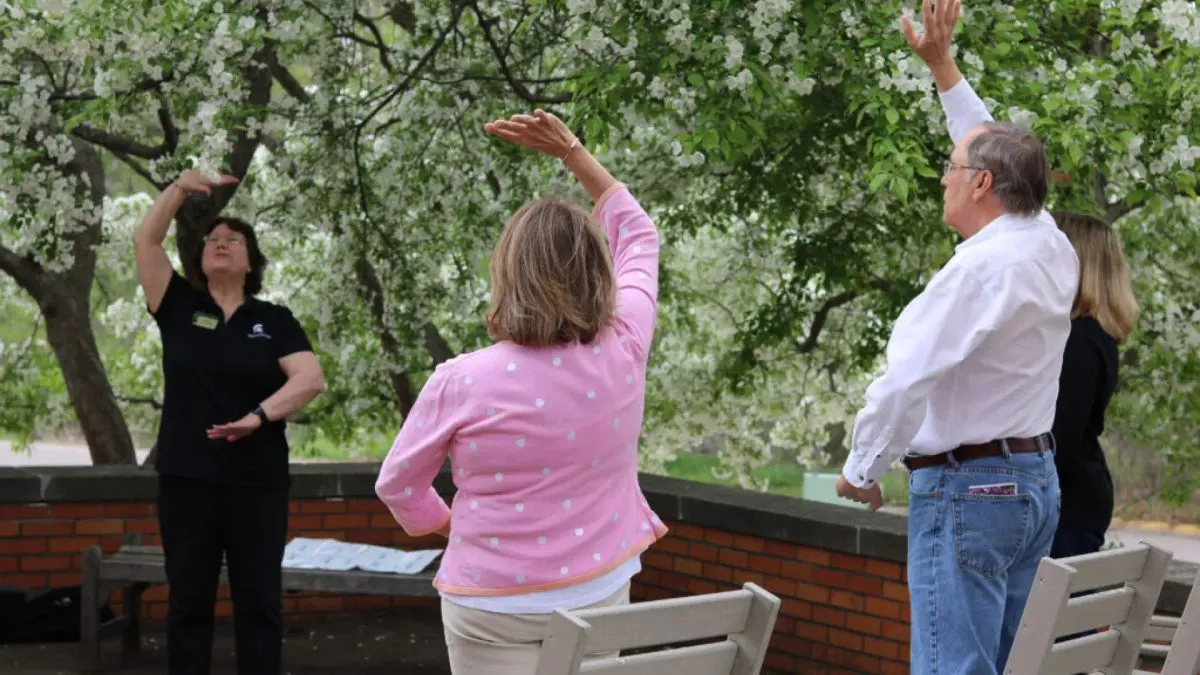
The center’s community work extends beyond research recruitment. Programs such as Catching Your Breath and Mitten Minds offer mindfulness, education, and peer connection for people living with dementia and their care partners.
This two-way relationship allows discoveries and community experience to inform each other. Laboratory findings can guide clinical studies, while patients, families, and community partners can help researchers identify the questions that matter most.
Supporting research, care, and training
The center also trains emerging dementia researchers and clinicians, helping prepare the next generation to work across scientific disciplines, health systems, and communities. Its investigators conduct longitudinal studies and clinical trials, evaluate drug and non-drug interventions, and explore environmental, vascular, and biological risk factors.
The ADRC grant provides substantial support for the center’s core research infrastructure. Additional grants, philanthropy, and community partnerships expand its education, wellness, and outreach programs beyond the activities supported by the federal award.
This combination of federal investment and broader support allows the center to connect basic science, clinical research, community engagement, education, and care-partner programming within one statewide effort.
Why it matters
Alzheimer’s disease and related dementias affect millions of Americans, along with the families and care partners who provide years of support. The challenge crosses medical specialties, institutional boundaries, communities, and state lines.
Michigan’s collaborative structure offers a way to address that complexity. By linking three public research universities with health systems and communities, the center expands who can participate in research and helps knowledge move more efficiently from laboratories into clinical studies and practice.
Its national value lies not in a single blood test, brain scan, or clinical trial, but in the infrastructure behind discovery: diverse long-term data, shared biological samples, community-informed research, and scientists trained to collaborate across disciplines.
As the center launches into its third five-year cycle of ADRC support, its leaders see the next phase as both a Michigan responsibility and a national opportunity. By pairing earlier detection and emerging treatments with a broader understanding of the factors beyond amyloid, the center aims to produce knowledge that reflects — and ultimately benefits — the full range of people and families affected by dementia.