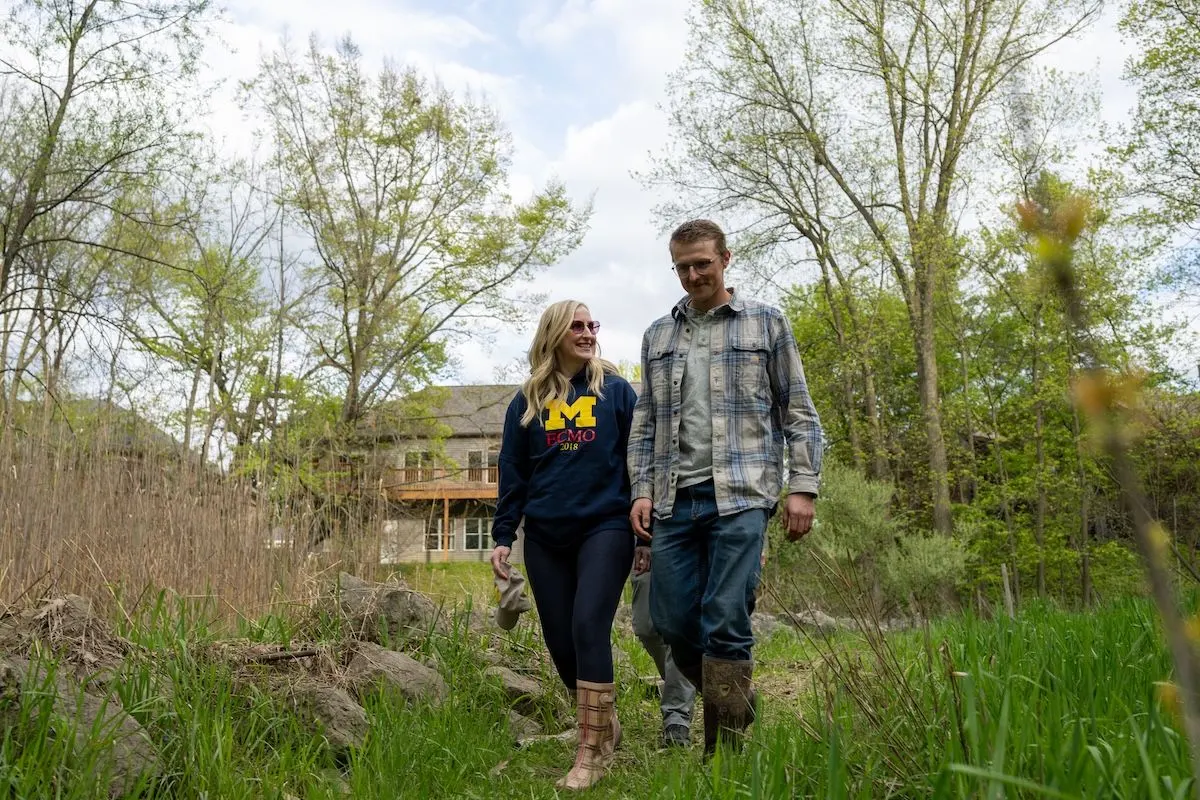
Within minutes, Kuntzsch was in an ambulance. Within hours, she was in an intensive care unit, growing weaker as her heart failed and other organs began showing signs of distress. After nearly a week without improvement, she advocated for a transfer to the University of Michigan — a decision she believes helped save her life.
At U-M, a heart biopsy revealed the cause: giant cell myocarditis, a rare, irreversible, and rapidly progressing condition. The only solution was a heart transplant, and she needed one within days.
“I didn't have time. Time was not on my side… And I needed help surviving until a match could be found,” Kuntzsch said.
Then came the technology that bought her time.
Kuntzsch was placed on extracorporeal membrane oxygenation, or ECMO — an advanced life support system that temporarily takes over the work of the heart and lungs. ECMO oxygenates blood outside the body, allowing vital organs to rest, recover, or remain stable while clinicians determine the next step.
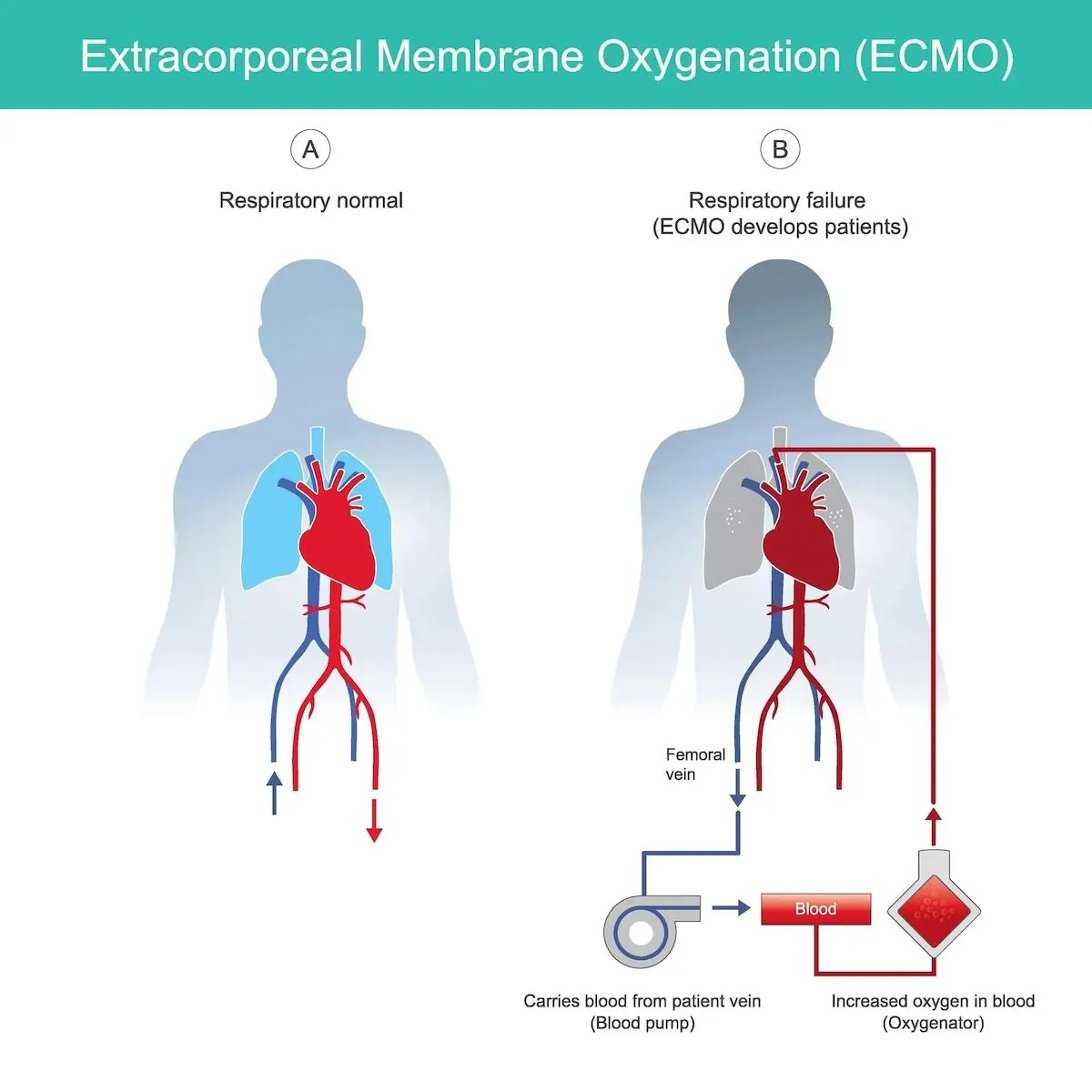
“ECMO was my bridge. It was the bridge that I needed to give me more time, to prevent me from getting sicker before a new heart could be found,” she explained.
The timeline still feels almost impossible. She arrived at U-M on a Sunday night. On Monday, she had a heart biopsy. On Tuesday, she received the diagnosis and was placed on ECMO. On Wednesday, she was added to the transplant list. On Thanksgiving Day, a donor match was found. By Friday, a new heart was beating in her chest.
“From my visit to my family doctor thinking I was getting a chest cold to having a new heart was just eleven days,” Kuntzsch said.
For her family, Thanksgiving became more than a holiday. It became the anniversary of a miracle.
“We made the best phone calls of our lives — we were calling friends and family while they were sitting down for their Thanksgiving dinner,” she said. “Everybody was celebrating.”
A U-M Breakthrough That Became a Global Standard
Founded in 1980 by the late Dr. Robert Bartlett, a pioneering surgeon and researcher, the U-M Health ECMO Program helped transform ECMO from an experimental therapy into a globally recognized standard of care for critically ill newborns, children, and adults facing severe heart and lung failure.
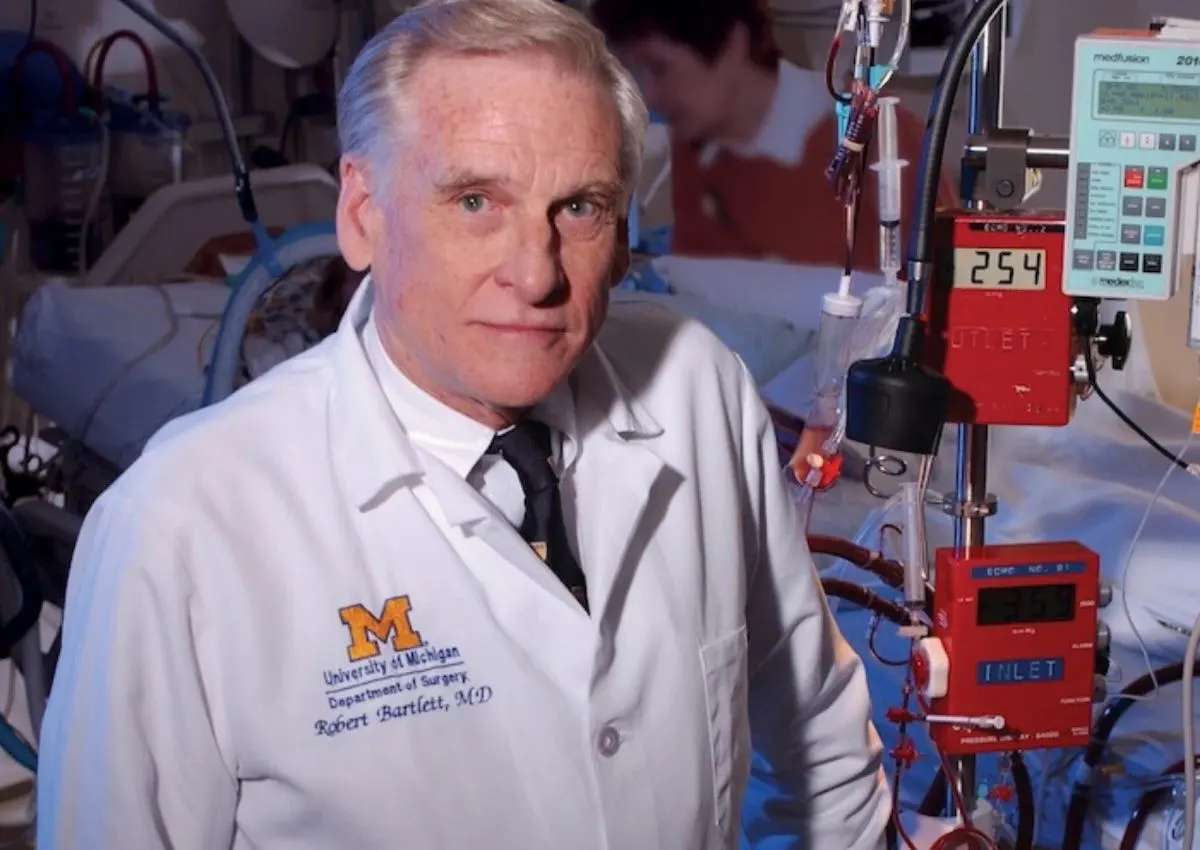
At its core, ECMO offers something both simple and extraordinary: time.
“ECMO is a therapy that is offered for people when everything else has failed. The heart has failed, the lungs have failed. ECMO buys time. It allows people to survive long enough until we can either treat and recover the failing heart or the failing lungs, or if we have time to replace them with transplant,” explained Jonathan Haft, M.D., the medical director of U-M’s ECMO Program.
ECMO does not cure the underlying illness, but it can keep patients alive while the body heals, medications take effect, or transplant becomes possible.
In its first year, the ECMO Program treated eight patients. Today, the program has cared for more than 3,000 and is recognized internationally for clinical excellence, education, and research.
“Currently, we are providing ECMO support for between 100 and 150 patients each year. ECMO has supported hundreds of thousands of patients around the world, and the numbers continue to grow because the therapy’s becoming a lot more reliable, safer, more efficient, and more centers have the capability of doing it,” Haft added.
About 800 hospitals in 66 countries now offer the option. Roughly 54% of patients placed on ECMO survive to leave the hospital — patients who, without it, would have almost certainly died.
ECMO gained broader public recognition during the COVID-19 pandemic, when intensive care units worldwide used it to support patients with acute respiratory distress. More than 17,000 COVID-19 patients have been recorded as receiving ECMO support to date.
But long before the pandemic, U-M was helping define what extracorporeal life support could be — through patient care, research, engineering, training, and global collaboration.
Care That Never Turns Off
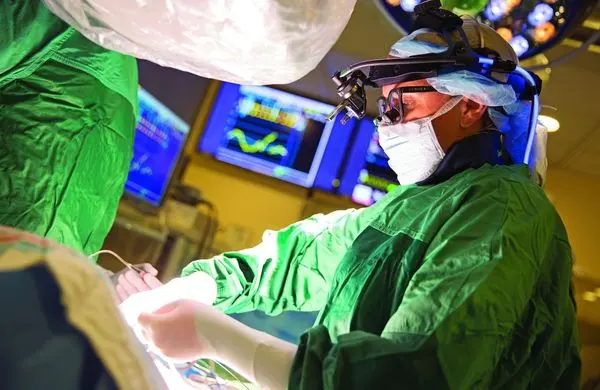
At U-M Health, ECMO care is available around the clock. Specialized nurses, respiratory therapists, physicians, surgeons, perfusionists, and other care team members work together to support patients whose conditions can change minute by minute.
The program also supports patients beyond the hospital, helping coordinate transfers for critically ill patients, including airborne transport through Survival Flight.
In 2025, the program earned a Platinum Center of Excellence award, recognizing its quality, safety, and commitment to the highest standards in extracorporeal life support.
The program’s impact extends far beyond Ann Arbor. U-M trains clinicians from around the world through certification courses endorsed by the Extracorporeal Life Support Organization, known as ELSO. Those trainees carry knowledge back to their hospitals and communities, expanding access to ECMO and improving care globally.
“That was a big part of his mission. Dr. Bartlett was very passionate about providing education to teach other programs how to use ECMO,” Haft explained.
That educational mission remains central to the program today.
ECMO and Beyond
U-M researchers are also developing technologies that build on ECMO’s core principles.
Alvaro Rojas-Peña, M.D., the director of the Robert H. Bartlett Extracorporeal Life Support Laboratory, explained, “The ECMO lab at Michigan has more than 20 principal investigators from different fields in medicine. We have surgeons from transplant, cardiac, thoracic, trauma, intensive care, sometimes oncology. We partner with ER, pharmacy, chemistry, public health, and biomedical engineering.”
“We use ECMO, this technology, as our main mothership. And then we have satellite projects that are associated with it.”
Those projects include a portable ECMO system, artificial placenta technology, and systems to resuscitate donor organs.
A portable ECMO system could make lifesaving support easier to deliver during transport or in more flexible clinical settings. Artificial placenta systems could one day support extremely premature infants whose lungs are not yet ready to function on their own. Donor organ resuscitation technologies could help preserve or restore organs before transplant, potentially increasing the number available for patients waiting for the gift of life.
Each effort builds on the same principle that has guided the program for nearly five decades: when the body is in crisis, advanced technology can create time, stability, and possibility.
A Legacy Measured in Breath
At Michigan, ECMO moved from the lab to the bedside — and then from one hospital to hundreds around the world.
For some patients, it means recovery. For others, transplant. For many, it means another birthday, another holiday, another hike, another phone call home.

For Kuntzsch, it meant surviving sudden heart failure and receiving a second chance at life.
“I am so deeply grateful for my heart donor, the team at Michigan Medicine, my incredible support network, and for getting a second chance at life,” she said.
One U-M surgeon’s vision helped transform the future of critical care. Today, through every patient saved, every clinician trained, and every breakthrough still to come, that legacy continues.