
The stakes for U.S. manufacturing
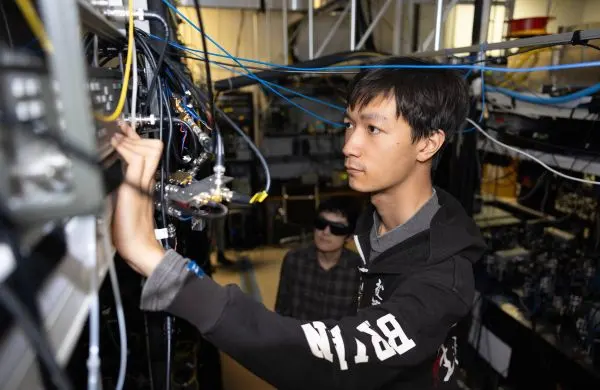
The COVID-19 pandemic made the problem visible. In 2020, semiconductor shortages left parking lots full of unfinished cars across the country, unable to be sold because they were missing critical chips. Between late 2020 and the end of 2022, the average price of a new vehicle rose by nearly $10,000 — a jump that had previously taken about eight years.
Even before the pandemic, electronics accounted for roughly 40% of the cost of a new car. As vehicles become more connected, electric, and autonomous, demand for advanced chips will only grow.
Today, semiconductor manufacturing has a major choke point: Taiwan Semiconductor Manufacturing Company, or TSMC, reportedly produces 68% of global chips and about 90% of the most advanced chips. U‑M researchers say that concentration creates risk for the global economy.
“TSMC is a great company, but it’s a single point of failure,” said Valeria Bertacco, the Mary Lou Dorf Collegiate Professor of Computer Science and Engineering. “There is no benefit for anybody to have a single company that can produce the most advanced technology node.”
The U.S. CHIPS Act, signed into law in 2022, committed $52 billion over five years to strengthen domestic semiconductor manufacturing and research. Michigan is seeing direct benefits through investments such as Hemlock Semiconductor’s new manufacturing facility in Hemlock, Michigan, while nearby states, including Indiana and Ohio, are also expanding semiconductor capacity.
Why the next generation matters
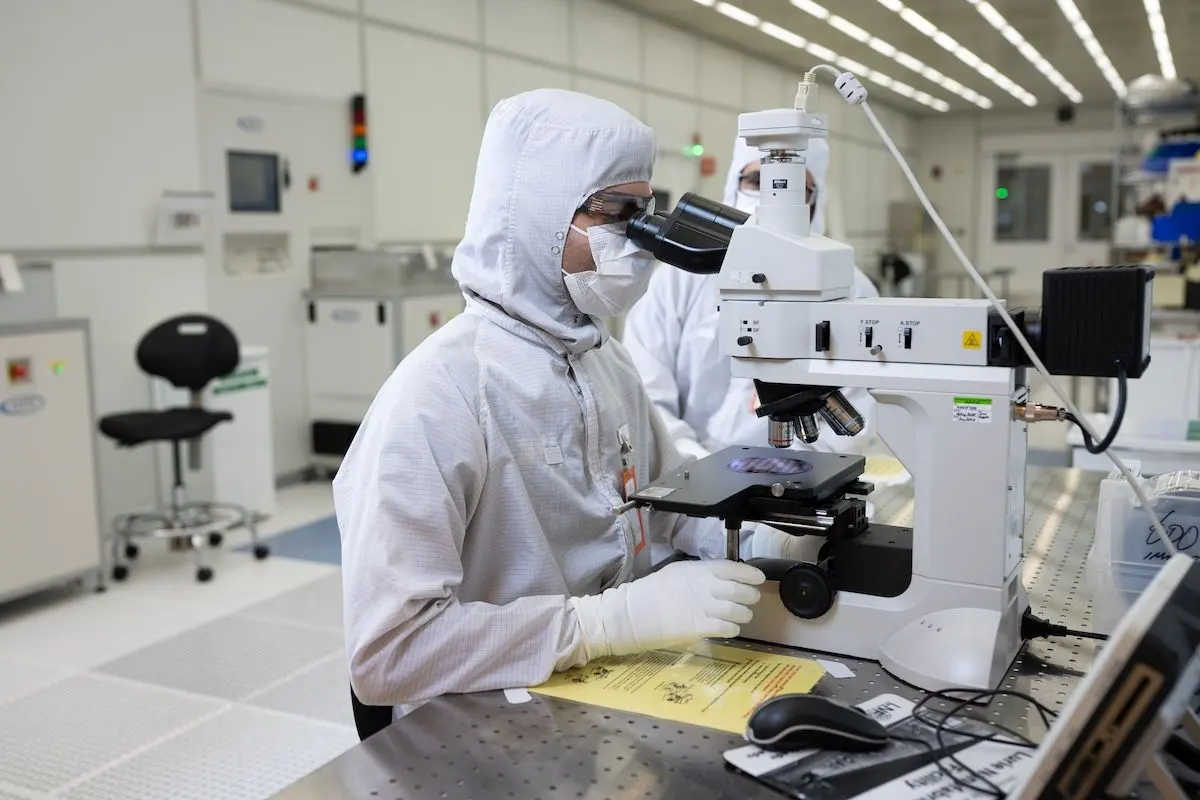
Semiconductor manufacturing is central to economic security, technological leadership, and national resilience. But competing with today’s most advanced chip manufacturing is difficult: TSMC invests roughly $40 billion each year in equipment and research alone.
That scale makes it challenging for the U.S. to simply replicate existing manufacturing systems. Instead, U‑M researchers point to a different opportunity: lead in the next wave of semiconductor innovation.
For decades, chip progress was driven by miniaturization, often described through Moore’s Law — the observation that the number of transistors on an integrated circuit roughly doubled every two years. But as transistors have shrunk to the nanoscale, further miniaturization has become more expensive and technically difficult.
“Moore’s Law really drove a huge explosion in the scale of chip manufacturing and the utility of those chips across all sorts of industries, including the phones that we use every day,” explained Gus Evrard, the Arthur W. and Alice R. Burks Collegiate Professor of Physics.
Now, researchers are exploring alternatives, including new materials and new computing architectures that could define the next era of chipmaking.
Beyond silicon
While silicon remains foundational to modern electronics, the future of semiconductors may depend on other materials, especially for extreme environments and high-performance applications.
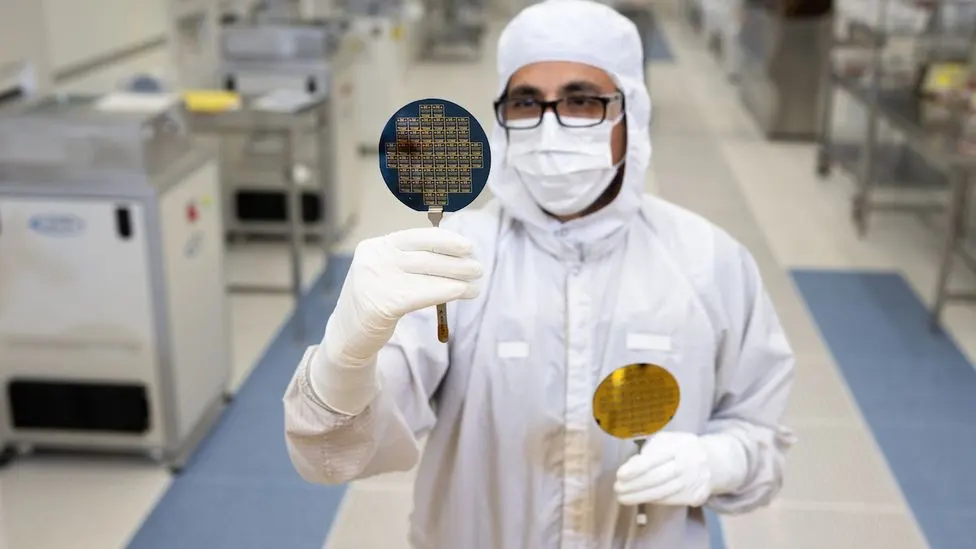
“The government has a strong interest in developing leading-edge technologies. These technologies don’t all use silicon. They use other semiconductors like silicon carbide, gallium nitride, and diamond,” said Becky Peterson, the director of the Lurie Nanofabrication Facility at U-M.
These materials could enable electronics that operate in places where conventional chips cannot, including aircraft engines, hypersonic systems, oil and gas wells, geothermal wells, high-power systems, and harsh industrial environments.
“At the University of Michigan, we’re seeking to advance these novel technologies and to explore the edges of what they can do to develop new capabilities for the U.S. and for the world,” Peterson said.
U‑M’s nanofabrication advantage
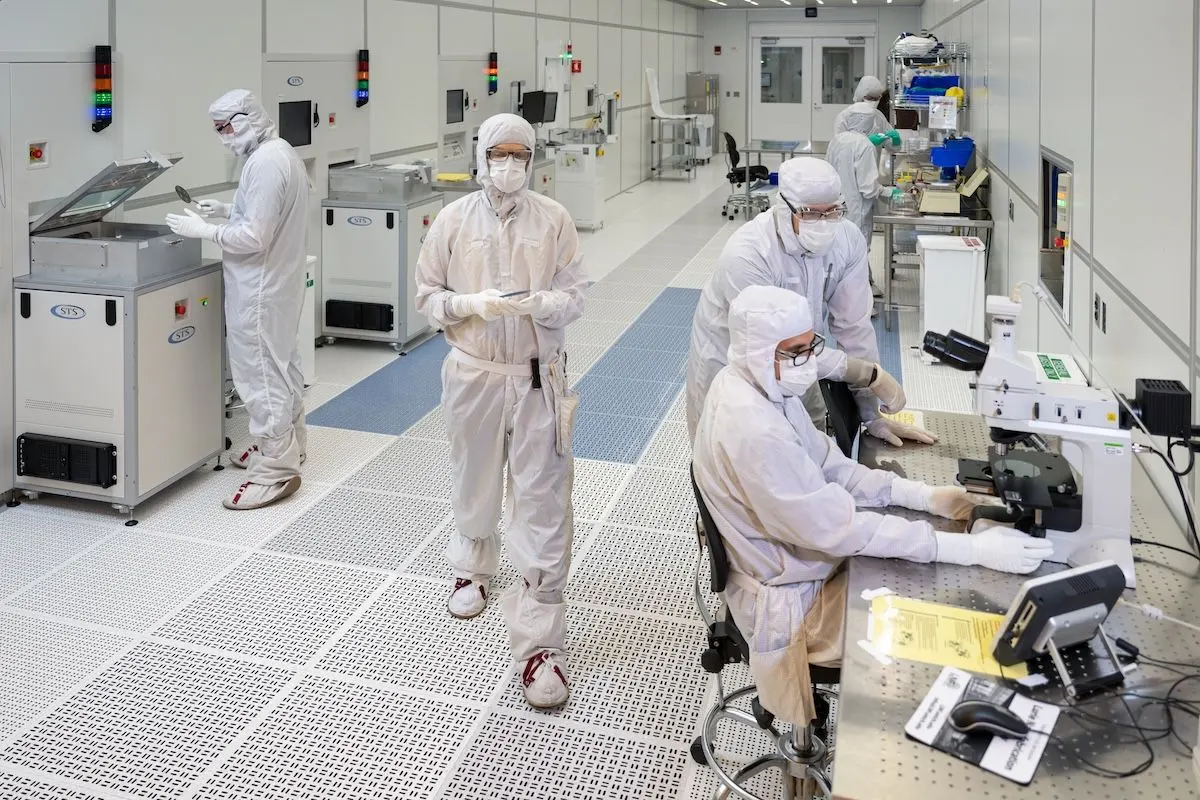
A key part of U‑M’s semiconductor strength is the Lurie Nanofabrication Facility, a 24/7 cleanroom that gives researchers and industry partners access to advanced nanofabrication tools.
The facility supports more than 400 users from academia and industry, offering more than 135 tools along with the infrastructure and technical expertise needed to operate them. Researchers use the facility to build quantum and photonic devices, high-power and high-voltage electronics, biotechnology platforms, and experimental semiconductor systems.
At Lurie, researchers and companies can prototype chips and devices using emerging materials and architectures — an essential step toward identifying which technologies could support future domestic manufacturing.
The Midwest opportunity
The Midwest’s combination of research universities, advanced manufacturing expertise, and automotive demand gives the region a strategic role in rebuilding the U.S. semiconductor ecosystem.
U‑M contributes talent and research capacity in chip design, nanofabrication, materials science, and computing. Detroit’s automakers provide a major nearby market for advanced chips, especially as vehicles become more automated and software-defined. Meanwhile, semiconductor investments across Michigan, Indiana, and Ohio are expanding the region’s manufacturing footprint.
Bertacco said the CHIPS Act is an important start, but long-term progress will require sustained commitment.
“There is still funding being distributed, but I really hope that there will be another investment down the road,” she said. “If it’s a one-time thing, it will be difficult to build enough momentum that is sustained.”
For U‑M researchers, the path forward is clear: the United States may not regain semiconductor leadership by only trying to manufacture the most advanced chips of today. It can do so by helping invent — and prepare to manufacture — the chips of tomorrow.
Related story: What it takes to bring semiconductor manufacturing back to the US