Advancing our work toward carbon neutrality on campus
Heating buildings in the cold Michigan winter requires significant energy. Likewise, campus cooling needs are becoming more pronounced. As part of U-M’s Campus Plan 2050, the university is exploring ways to reduce reliance on fossil fuels.
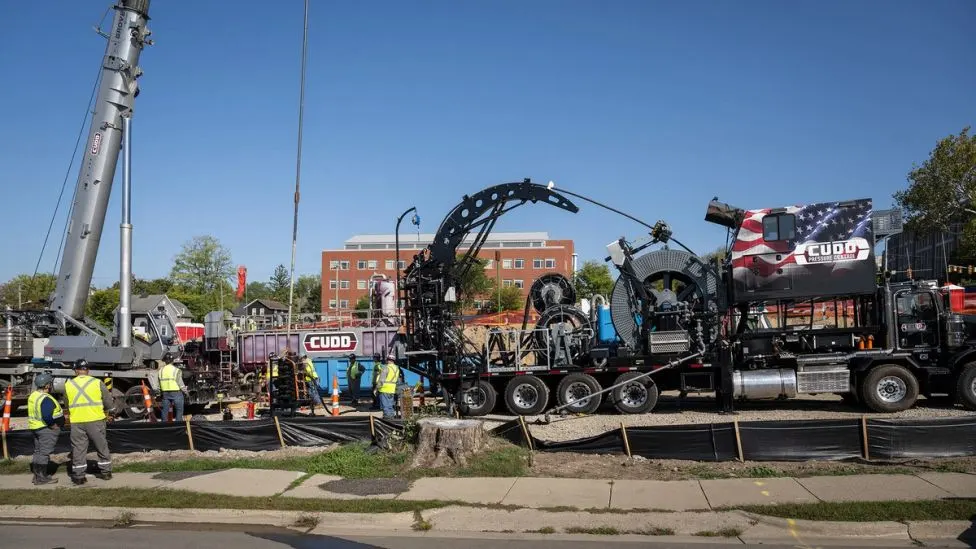
This includes testing geoexchange technology that could help modernize systems, increase efficiency, and lower costs. A critical step in validating this approach is drilling a test borehole so that engineers can assess subsurface conditions.
Story highlights:
- Geoexchange systems use ground-sourced pumps that rely on Earth’s underground temperatures to move heat in and out of building
- These systems provide more heating and cooling per unit of energy input than conventional systems, and they also require less water
- Typical geoexchange systems are about 800 feet below the surface; this test will double that — reaching a depth of 1,600 feet — to gain critical data to understand the limits and potential of deeper technology
- This project reflects U-M’s broader approach of embedding innovation not just into academics, but campus planning and operations
- This test borehole builds on existing projects and research elsewhere on campus
Impact Areas
Over the next 10 years, we will make demonstrable advancements for the greater good in these five impact areas: