Giving Hope for Fertility: U-M Researchers Invent Artificial Ovary

A gloved hand holding a vial with pink gas coming out of it

A New Path to Parenthood for Cancer Survivors

Many young people who survive cancer or other illnesses lose the ability to have children due to treatments that damage their ovaries. Now, University of Michigan scientists, led by Professor Ariella Shikanov, are working on a first-of-its-kind artificial ovary that could restore fertility and hormone production for these survivors.

Using cutting-edge tools, the research team created a detailed “map” of the human ovary, showing which cells and genes help eggs mature and how hormones are made. By zooming in at the single-cell level, their work could help doctors and scientists understand what makes a healthy egg and how to fix problems resulting from aging or disease.

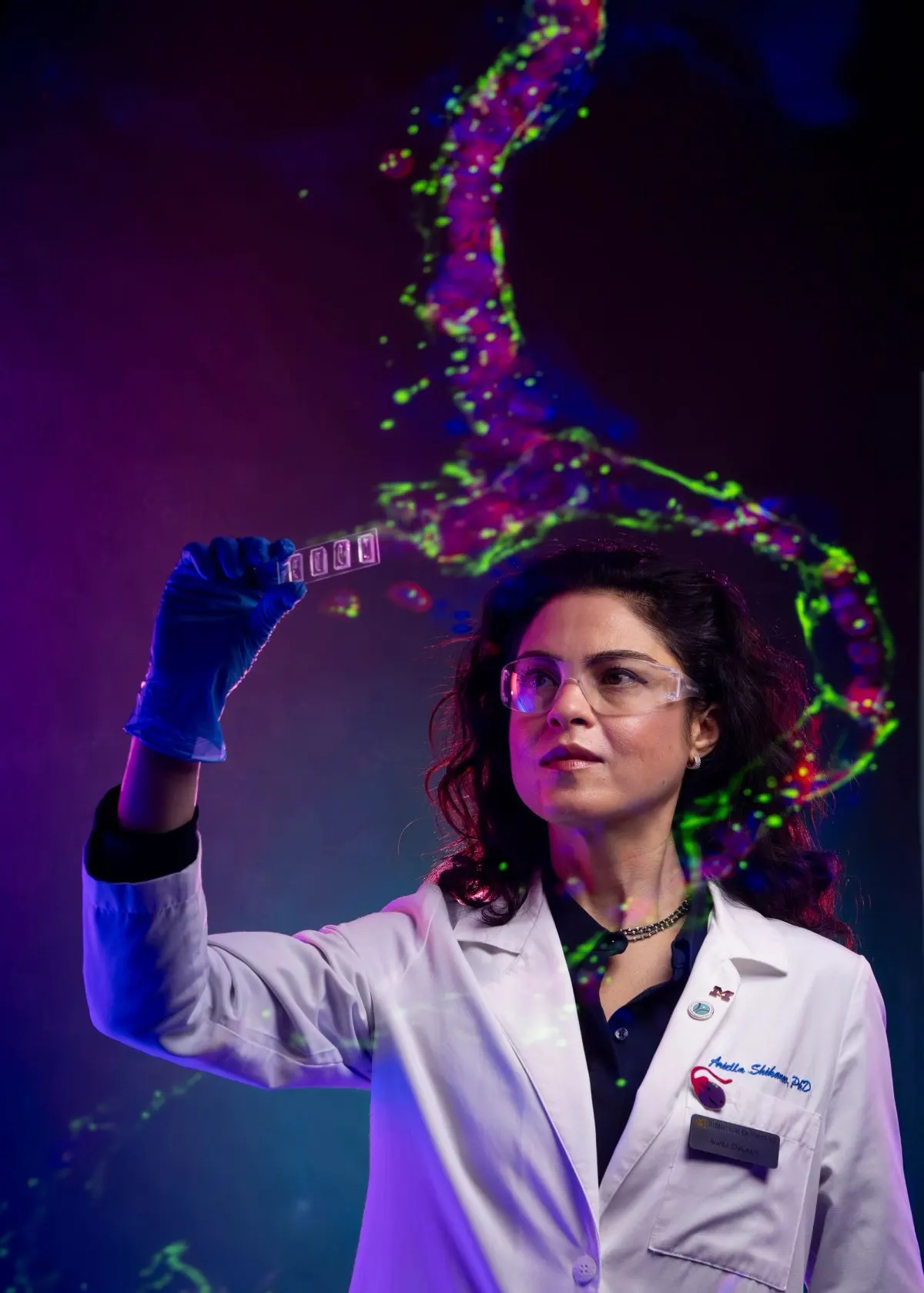
Ariella Shikanov holds up a set of artificial ovaries

Why this Matters:

  • This new technology could make it possible to engineer ovarian tissue that lasts longer and works better than current methods, giving patients more years of fertility and normal hormone levels.
  • The research reveals dozens of new genes crucial to egg development, opening doors for treatments and breakthroughs in reproductive health.
  • The project is backed by major organizations and part of a global effort to “map every cell type in the human body”—helping us better understand health and disease.

Thanks to the University of Michigan’s innovation, young people who once had little hope of building a family may have new options for the future.

Impact Areas featured in this story

Through our vision, U-M is striving to make demonstrable advancements for the greater good in five distinct impact areas. The following are highlighted in the story above.